Explore
Age 8-16 · Future Engineers

STEM Explorers Program

Drag your mouse to control the robot! We believe the best way to understand technology is to build it with your own hands.

Hands-On Learning

Core Curriculum

Our curriculums bypass boring theory and dive straight into assembling hardware, writing actual code, and flying drones.

Coding
💻
Logic & Syntax

Creative Coding

Transition from block-based coding (Scratch) into writing real Python scripts to control digital game environments.

Robotics
🤖
Mechatronics

Build-A-Bot

Assemble motors, chassis, and wheels to construct a physical robot, then program it to navigate through obstacle courses.
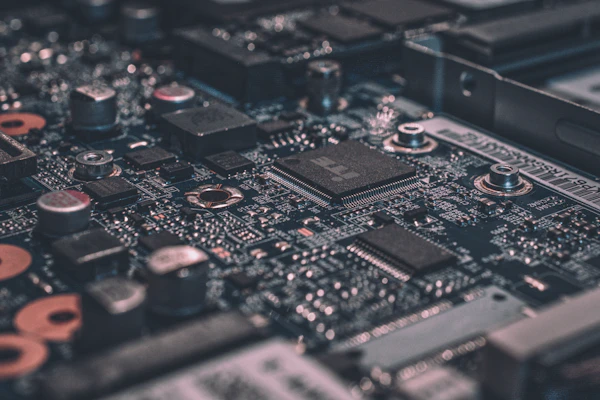
Circuits
Hardware Basics

Circuits & Sensors

Learn how electricity flows. Wire up LEDs, ultrasonic sensors, and buzzers using Arduino microcontrollers.

3D Printing
🖨️
Digital Fabrication

3D Design Lab

Design custom keychains, toys, and robot parts using Tinkercad, then watch them come to life on our 3D printers.

Discover & Play

Curiosity Lab

Space Tech

The Spacewalker

Hover to reveal STEM facts! 🔍

🚀 Did you know?

  • Weight: A full NASA space suit weighs about 280 lbs on Earth, but nothing in zero gravity!
  • Protection: It protects astronauts from temperatures ranging from -250°F to 250°F.
  • Cost: A single modern space suit costs over $12 million to build.
Astrophysics

Orbital Mechanics

Hover to reveal STEM facts! 🔍

🪐 Did you know?

  • Mass: The Sun holds 99.8% of all the mass in our entire solar system!
  • Speed: Earth is traveling through space at roughly 67,000 miles per hour.
  • Gravity: Jupiter's massive gravity acts like a shield, catching asteroids before they hit Earth.
Engineering

X-Ray Scanner

Robot Base Robot Xray

Hover to reveal STEM facts! 🔍

🔬 Did you know?

  • LiDAR: Robots "see" using lasers! LiDAR bounces light off objects to map the room in 3D.
  • Actuators: Electric servos act exactly like human muscles to bend robotic joints.
  • Python: Most modern AI robotics run on the Python programming language.

Hover to reveal the facts!

🐛 What was the first "Computer Bug"?
It was a literal bug! In 1947, engineers found an actual moth stuck inside the Harvard Mark II computer.
🚀 How fast does the Space Station internet go?
The ISS transfers data at about 600 Mbps! That's faster than most home internet connections on Earth.
🧠 How many "brains" does an Octopus have?
An octopus has 9 brains! One central brain, and a mini-brain in each of its 8 arms to control movement independently.
UAV DIAGNOSTICS // HOVER TO SCAN
Drone Blueprint
Optical Payload
4K 60fps Gimbal Camera
Propulsion
Brushless DC Motor
Power Core
High-Capacity LiPo Battery
Flight Controller
AI Auto-Navigation Chip

Join the Next Generation

Secure a spot for your child in our upcoming robotics and coding bootcamps. Spaces are highly limited due to hardware requirements.